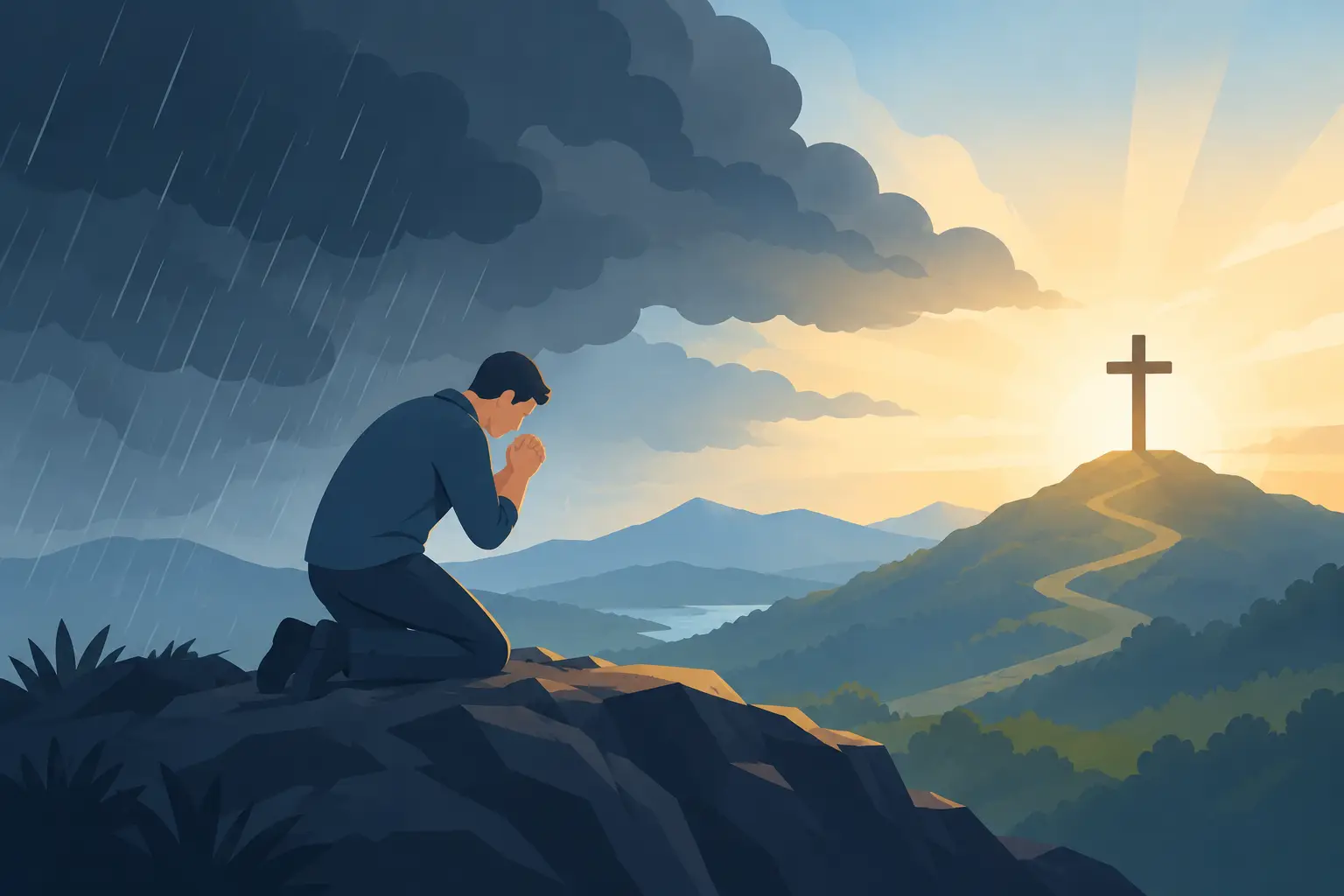
A person rarely asks about faith when life feels easy. The question rises in hospital rooms, in the silence after a loss, in the memory of a homeland left behind, and in the long work of beginning again. The faith in the Lord meaning is not merely agreeing that God exists. It is choosing to place one’s life, fear, and future in the care of a power greater than despair.
For many people, faith begins where certainty ends. It does not erase grief or make suffering sacred in itself. Rather, it gives suffering a place to go. It allows a wounded heart to say, “I do not understand this road, but I will not walk it alone.”
Faith in the Lord Meaning Is Living Trust
In Christian language, the Lord is God – the One who creates, judges, forgives, guides, and calls humanity toward love. To have faith in the Lord is to trust God’s character even when the next chapter is hidden. This trust is personal. It is more than respect for religious tradition, more than a habit passed from parent to child, and more than words repeated without attention.
Living faith says that fear does not have the final word. A person may still tremble, question, and mourn. Faith is not the absence of those human responses. It is the decision to keep turning toward God within them.
This is why faith can be strong without being loud. Someone caring for a sick parent, applying for work after years of setbacks, or rebuilding after displacement may be practicing profound faith through small acts of perseverance. Prayer before a difficult conversation, honesty when dishonesty would be easier, and kindness toward someone who has caused pain can all become expressions of trust in the Lord.
Trust Is Not Passive Resignation
There is a vital difference between faith and resignation. Resignation says, “Nothing can change, so nothing I do matters.” Faith says, “God is present, so I will do what is mine to do with courage.”
A faithful person can seek medical care, ask for help, protect their family, speak against injustice, and work for peace. Trusting God does not require pretending that danger is harmless or that trauma leaves no mark. It means refusing to let darkness define the whole story.
That distinction matters especially for survivors of war, migration, poverty, and family separation. Some wounds cannot be explained with easy spiritual answers. Faith should never be used to silence pain or pressure someone to forgive before they are ready. The Lord’s compassion has room for lament. In the sacred stories of many traditions, tears and prayer often stand side by side.
Faith Grows in the Middle of Hardship
Hardship tests what a person believes, but it can also reveal a deeper kind of faith. When familiar supports fall away, people may discover an inner strength they did not know they carried. For some, that strength arrives through a remembered prayer. For others, it comes through a stranger’s help, a dream that brings clarity, or an unexpected moment of peace.
These experiences should be held with humility. Not every hardship has a simple reason, and not every spiritual experience can be neatly explained. Yet many people know the moment when survival became more than their own effort. They sensed mercy carrying them through the impossible.
Rico Nguyen’s story in Faith in the Lord speaks from this territory of survival, displacement, spiritual encounter, and purpose. It invites readers to consider that a life marked by suffering may also become a witness to endurance. A refugee’s journey is not only about what was lost. It can also testify to what was preserved: dignity, memory, faith, and the capacity to build a future.
Questions Do Not Cancel Faith
Some people fear that questions mean they are failing God. But honest questions can be part of a mature spiritual life. “Why did this happen?” “Where were You?” and “What am I being called to do now?” are not always signs of unbelief. Often, they are prayers spoken without decoration.
Faith becomes fragile when it demands that people deny what they truly feel. It becomes resilient when it brings every feeling before the Lord – anger, gratitude, doubt, hope, and longing. A person who keeps returning to God with an open heart is not far from faith. They are practicing it.
Prayer Makes Room for Guidance
Prayer is one of the clearest ways faith becomes personal. It is not a performance or a formula for controlling outcomes. Prayer is a relationship. It is the quiet act of bringing one’s full self before God and listening for what love, truth, and wisdom require.
Sometimes prayer brings comfort. Sometimes it brings conviction. A person may pray for relief and realize they must apologize, release resentment, seek counsel, or make a difficult change. Faith in the Lord does not always lead toward the easiest path. It often leads toward the truest one.
A simple prayer can be enough: “Lord, guide me through this day.” For a person whose past contains loss or upheaval, even that sentence may be an act of courage. It acknowledges need without surrendering hope.
Prayer can also connect generations. In immigrant and refugee families, a grandmother’s prayer, a father’s blessing, or a mother’s quiet devotion may become part of the inheritance carried across borders. Language, customs, and circumstances may change, but the longing to place loved ones in God’s care remains recognizable.
Faith Calls Us Toward Compassion
If faith remains only private reassurance, it has not reached its full purpose. Trust in the Lord should shape the way a person sees other people. Every neighbor, stranger, and enemy is part of the human family. This does not mean ignoring wrongdoing or abandoning wise boundaries. It means refusing to treat anyone as beyond dignity.
The world’s divisions can make compassion feel naive. Religious difference, political conflict, racial hatred, and the fear of outsiders often tempt people to retreat into suspicion. Yet faith calls for a more difficult response: to stand for truth without losing mercy.
For Christians, love of God and love of neighbor cannot be separated. For spiritually curious readers, this truth may echo teachings found across many traditions – the call to relieve suffering, honor life, and recognize a sacred bond among people. Interfaith respect does not require pretending that all beliefs are identical. It requires the humility to seek peace without surrendering conscience.
This is where faith becomes a force against the cosmic battle between light and darkness. Light appears whenever a person chooses compassion over cruelty, reconciliation over vengeance, and courage over indifference. These choices may seem small, but they resist the forces that divide communities and diminish human life.
How Faith Is Practiced Each Day
The meaning of faith is revealed gradually. It is formed through repeated choices, especially when nobody is watching. A person may begin by setting aside a few minutes each day for prayer or reflection. They may keep a record of moments when help, clarity, or strength appeared at the needed time. They may speak honestly with a trusted faith leader, counselor, or loved one when burdens become too heavy to carry alone.
Faith also asks for action. If reconciliation is needed, make the call when it is safe and wise. If someone is hungry, offer food. If a neighbor is treated as invisible, see them. If peace feels distant, begin by bringing less contempt into your own home and speech.
There will be seasons when faith feels vivid and seasons when it feels quiet. Neither season determines God’s nearness. Many faithful people have learned that silence is not abandonment. Sometimes it is the place where roots grow beneath the surface.
The faith in the Lord meaning, then, is not a promise of a painless life. It is the assurance that a life can be held by divine love, directed toward purpose, and made useful for the healing of others. When the road becomes uncertain, faith invites us to take the next honest step – and to believe that no act of mercy is ever wasted.
Leave a Reply